Trump Ends Prosecution of U.S. Firms Accused of Foreign Bribery
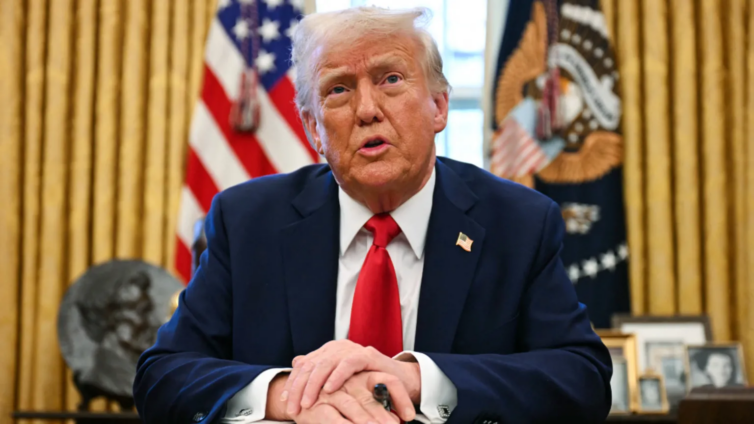
Trump Ends Prosecution of U.S. Firms Accused of Foreign Bribery
|
Getting your Trinity Audio player ready...
|
U.S. President Donald Trump has officially halted the enforcement of a decades-old anti-corruption law that allows for the prosecution of American businesses accused of bribing foreign officials.
The law, in place for nearly 50 years, prohibits U.S. companies from offering bribes to foreign government figures to secure or maintain business deals. However, in an executive order signed on Monday, Trump declared that rolling back the law would “mean a lot more business for America.”
A White House statement justified the move by arguing that “over-expansive” and “unpredictable” enforcement of the law posed a threat to U.S. economic interests. Trump has long been critical of the Foreign Corrupt Practices Act (FCPA), calling it a “horrible law” and insisting that “the world is laughing at us” for enforcing it.
The executive order also directs U.S. justice officials to review past and current FCPA cases and establish new enforcement guidelines.
Criticism From Anti-Corruption Groups
Transparency International, a global anti-corruption watchdog, condemned the decision, warning that it “diminishes—and could pave the way for eliminating—the crown jewel in the U.S.’s fight against global corruption.”
Despite the backlash, Trump defended the decision, arguing that enforcing the law unnecessarily penalizes American businesses for engaging in “routine business practices in other nations.” The White House echoed this sentiment, claiming that “FCPA over-enforcement” places U.S. companies at a disadvantage compared to foreign competitors, thereby creating an “uneven playing field.”
Trump has framed the rollback as part of his broader effort to remove “excessive barriers to American commerce abroad.”
Major Corruption Cases Impacted
The FCPA has been instrumental in prosecuting corporate corruption in recent years. Notable cases include:
- Goldman Sachs (2020): The bank agreed to pay nearly $3 billion to settle its involvement in the 1MDB corruption scandal, after its Malaysian subsidiary admitted to paying over $1 billion in bribes to secure business with the country’s sovereign wealth fund.
- Glencore (2022): The Swiss-based mining company paid $180 million to settle corruption allegations in the Democratic Republic of Congo, part of a larger case led by U.S. authorities.
- 2024 Investigations: By the end of last year, the U.S. Department of Justice and the Securities and Exchange Commission had filed 26 enforcement actions under the FCPA, with at least 31 companies under investigation.
Political Implications
Trump’s decision also comes amid a controversial intervention in domestic corruption cases. On the same day he signed the executive order, the Justice Department abruptly dropped its case against New York City Mayor Eric Adams, who had pleaded not guilty to charges of accepting illegal campaign funds and gifts in exchange for political influence. The White House justified the move by claiming the indictment had “restricted” Adams’ ability to address “illegal immigration and violent crime.”
Additionally, Trump pardoned former Illinois Governor Rod Blagojevich, a Democrat who served eight years in prison for corruption before his sentence was commuted by Trump during his first term.
The rollback of the FCPA is expected to have far-reaching consequences for both U.S. businesses and global efforts to combat corruption, as the administration prioritizes economic interests over regulatory oversight.